The New Architecture of Global Value: How the UAE, UK and Europe Are Redesigning Money
In recent years, the global financial system has been undergoing a quiet but profound transformation. What once revolved around physical cash, paper records, and centralized intermediaries is increasingly being reshaped by digital networks, code, and new legal constructs. In late 2025, this shift became unmistakable when three major economic powers, the United Kingdom, the United Arab Emirates, and the European Union each took decisive, but distinctly different, steps toward redefining money and value for the digital age. Together, these developments reveal a broader realignment: one in which ownership, currency, and financial trust are no longer anchored primarily in physical form or institutional tradition, but in legally enforceable digital systems designed to operate at global scale.

The New Architecture of Global Value: How the UAE, UK and Europe Are Redesigning Money
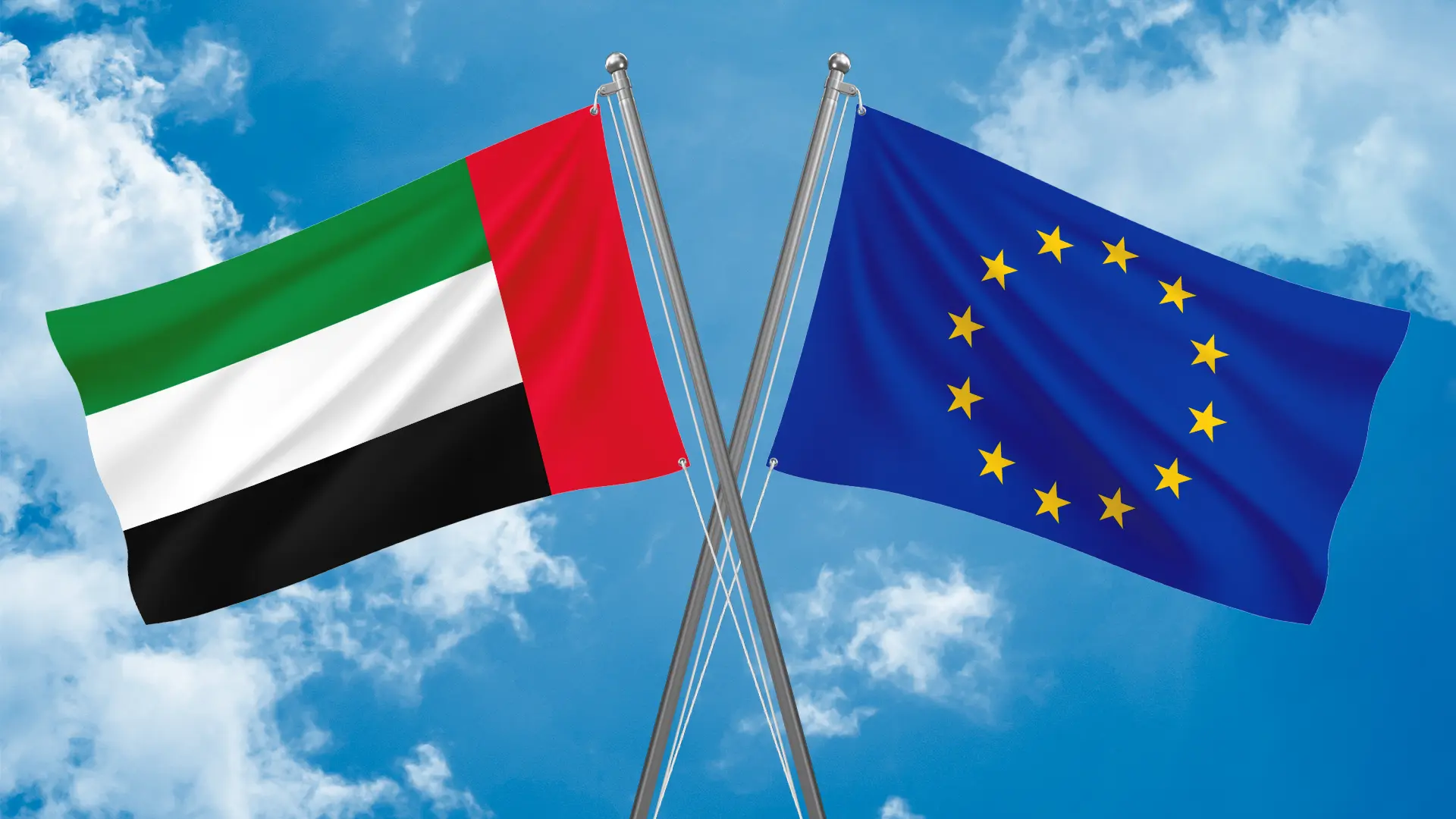
In late 2025, three major economic powers, the United Arab Emirates, the European Union and the United Kingdom, each took decisive steps toward a digital financial future. While their strategies differ, their vision converges: a world where property rights, currency, and economic power are embedded in digital networks and where financial trust is defined as much by code and legal clarity as by banks and banknotes.
Finally, the UK Breaks a Legal Barrier for Global Crypto Markets
The United Kingdom’s Property (Digital Assets etc) Act 2025 is not a small technical update to the law, on the contrary it represents a philosophical shift in the way societies define ownership. A Bitcoin, an NFT tied to a building, a tokenized bond are no longer anomalies forced into outdated legal categories. They are now recognized as property in their own right, gaining access to the full protections and remedies of one of the world’s most respected legal systems.
For decades, the English laws have been the bedrock of global commerce. By embracing digital assets at the statutory level and not through a piecemeal case law, the UK reduced legal uncertainty and strengthened its framework for digital-asset ownership and enforcement. Dealmakers and institutions now know that rights in digital tokens can be defended in court with the same strength as rights in physical assets.
While the UK is facing a billionaire exodus due to high taxes, this clarity may encourage investment at least in this field. It attracts digital-asset custodians, tokenization platforms, crypto exchanges, venture capital, and fintech innovation. It signals to global markets that London intends to remain not only a historic financial capital but a blueprint for the financial future.
The UAE Pushes into the Digital Economy with Real Transactions
While the UK has rewritten legal foundations, the United Arab Emirates has begun building atop its digital financial framework and already put it into practice. When the UAE executed a government transaction using its state-backed Digital Dirham and achieved settlement in under two minutes, it demonstrated more than efficiency. It showed that a central-bank digital currency can move from controlled pilots to real-world government operations.
Dubai and Abu Dhabi are well known for their speed, but this is not speed for spectacle. The Digital Dirham is part of a strategic overhaul to make the UAE a global gateway for digital payments, cross-border commerce, blockchain settlement, and tokenized assets. It complements the country’s broader Financial Infrastructure Transformation program (FIT), aimed at replacing friction with automation, paperwork with smart contracts, and queues with instant confirmations.
The policy dimension is equally intentional. The UAE’s alignment with updated international reporting standards for digital money (CRS 2.0) signals that innovation here is not a regulatory loophole but a controlled, strategically governed modernization. Where other nations hesitate, the UAE scales, and, where others debate theory, the UAE’s greatest minds are launching avangard products.
The EU’s Digital Euro: Sovereignty for the Software Age
The European Union is moving more cautiously, but with long-term consequences in mind. The goal of the Digital Euro is not simply convenience as Europe already leads in non-cash payments but sovereignty.
European officials recognize a growing risk: global payments are increasingly routed through non-European infrastructure, foreign card networks, and dollar-based settlements. As private tokens and foreign CBDCs expand their reach, Europe faces the possibility that transactions executed between two EU citizens might rely on systems ultimately controlled elsewhere.
According to the EU, the Digital Euro offers a counterbalance ensuring that monetary value circulating inside the Eurozone remains fully within the Eurozone’s domain technically, legally, and politically. If successful, Europe will maintain independence in the very infrastructure that shapes economic life. But success requires careful calibration: too fast a rollout risks destabilizing banks; too slow a rollout risks irrelevance.
What would be Europe’s advantage in my opinion? Scale. Even if this remains to be seen, a fully deployed Digital Euro could probably become one of the most widely used digital currencies on Earth.
The New Era of Programmable Wealth
What we are experiencing today is not merely a technological transition a but a once-in-a-century redesign of the foundations of commerce.
The United Kingdom has taken the abstract world of digital assets and rooted it firmly in centuries-old legal tradition. The United Arab Emirates has begun turning state-issued digital currency from vision into operational reality, testing how fast a sovereign economy can move when it treats innovation as national strategy. The European Union is building a monetary defense system for the software age, ensuring that its financial autonomy does not erode in a hyper-connected world.
All three economies each powerful in different ways are converging on a shared truth: the future of economic value will not be recorded on paper, transported by intermediaries, or delayed by borders. It will exist as secure, enforceable data, moving instantly across preferred networks.
History may record the late 2020s as the moment when humanity finally accepted that digital value is not an imitation of “real” value, but it is natural evolution. Money no longer needs metal, and ownership no longer needs paper.
Contact us for a free consultation
Get expert advice and tailored solutions from industry leaders.